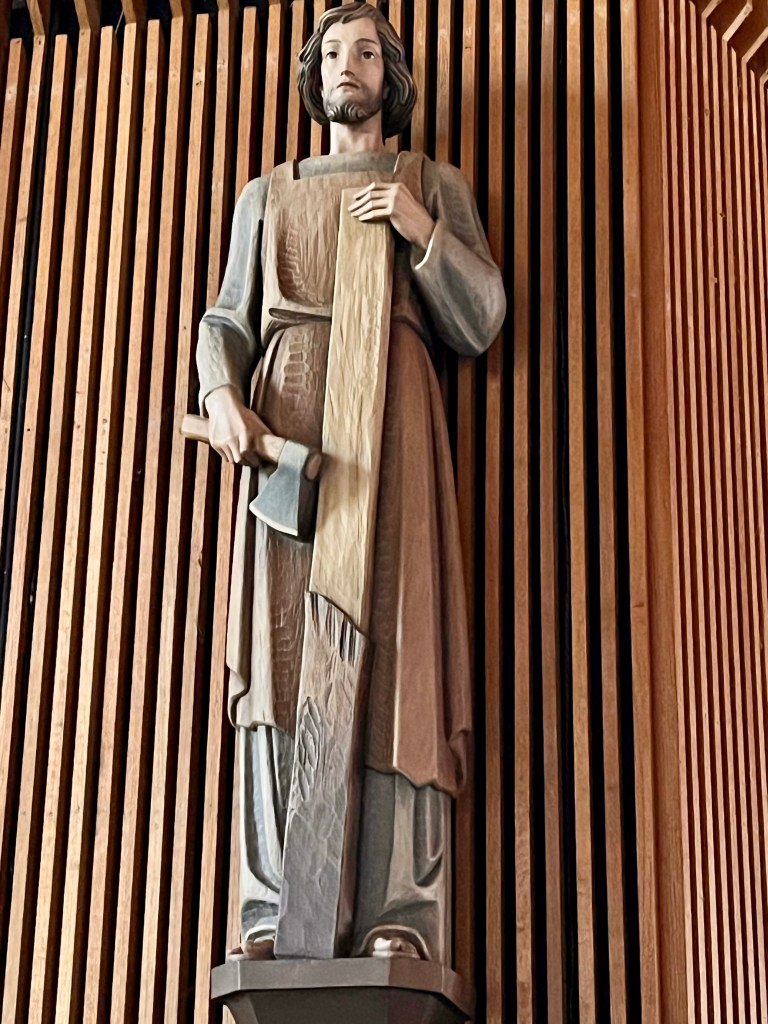
Joseph was a 1st-century Jewish man of Nazareth who, according to the canonical Gospels, was married to Mary, the Blessed Mother of Jesus, and was made the legal father of Jesus. Joseph is venerated as Saint Joseph in the Catholic Church, Eastern Orthodox Church, Oriental Orthodox Church, Anglicanism and Lutheranism. Scripture tells us that he was born in 30BC in Bethlehem and died in Nazareth, Israel in 20AD.
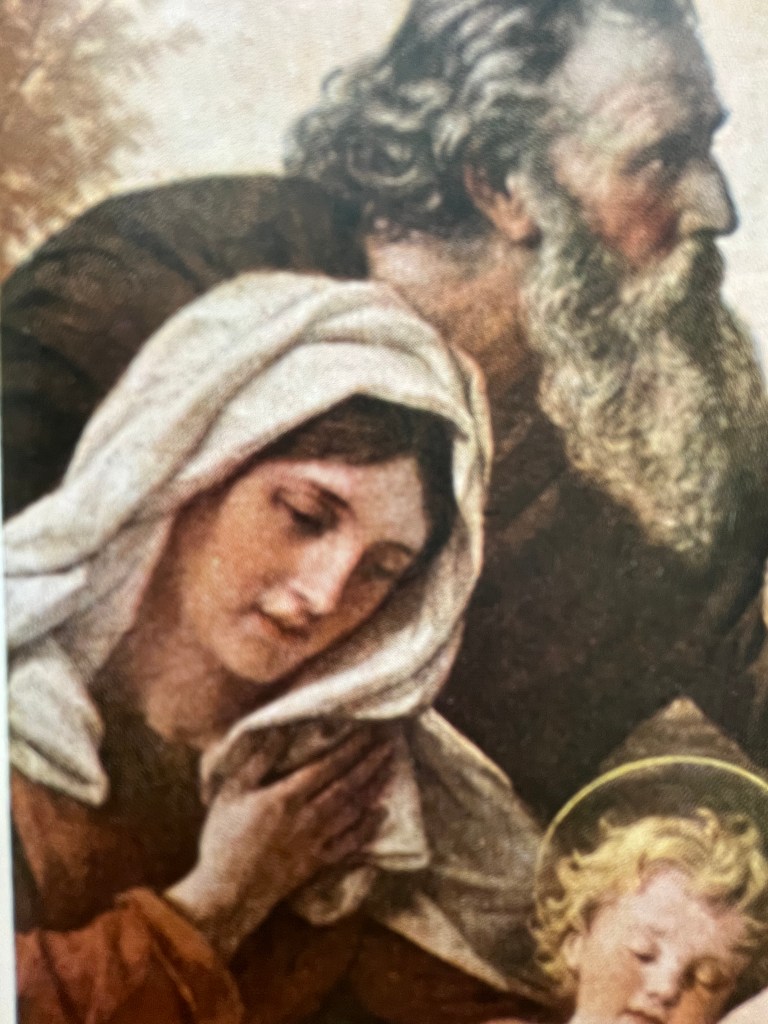
The St. Joseph’s Table is a centuries old Sicilian tradition celebrated on March 19th, the feast day of St. Joseph. Devotion to this much-loved saint began years ago in Christian communities. St. Joseph has been honored as Mary’s husband, Jesus’ foster father, provider and protector of the Holy Family, Patron of Carpenters and Workers, Patron of Chefs, and Patron of Families and Patron Saint of the Unborn.
Italians, especially Sicilians, have a special devotion to St. Joseph as they experienced his protection in an extraordinary way. A long time ago, as the story goes, an overwhelming and disastrous drought occurring during the Middle Ages in Sicily caused severe famine. As they suffered and starved, Sicilians offered novenas of prayer and promises to Saint Joseph as they
passionately implored of him for rain. And they were answered! An abundance of much needed rain came followed by a welcomed and rich harvest. And so, with grateful hearts a solemn feast was prepared following the harvest to honor St. Joseph.
In continued thanks and affirmation there still are religious celebrations of some spectacle and size in every town and village. Families prepared huge altar-tables filled with every kind of food, fancy pastry, Sicilian delicacies, flowers, and decorations. A statue of St. Joseph dominates the very center of the table. The guests of honor at the dinner would be the poor and needy people of the town. This was the organizers’ way to share their blessings, and to honor and thank St. Joseph. This celebration, known as the St. Joseph’s Table, has become a yearly tradition and this celebration is still very popular in Sicily and wherever Sicilians live.

Centuries later, Italian immigrants brought this tradition with them to the New World. Originally, the St. Joseph’s Table was held in private homes, but gradually moved to larger parish halls and became a community celebration. The expert Sicilian bakers welcome parishioners and the community to help prepare the Table and enjoy in the festivities.
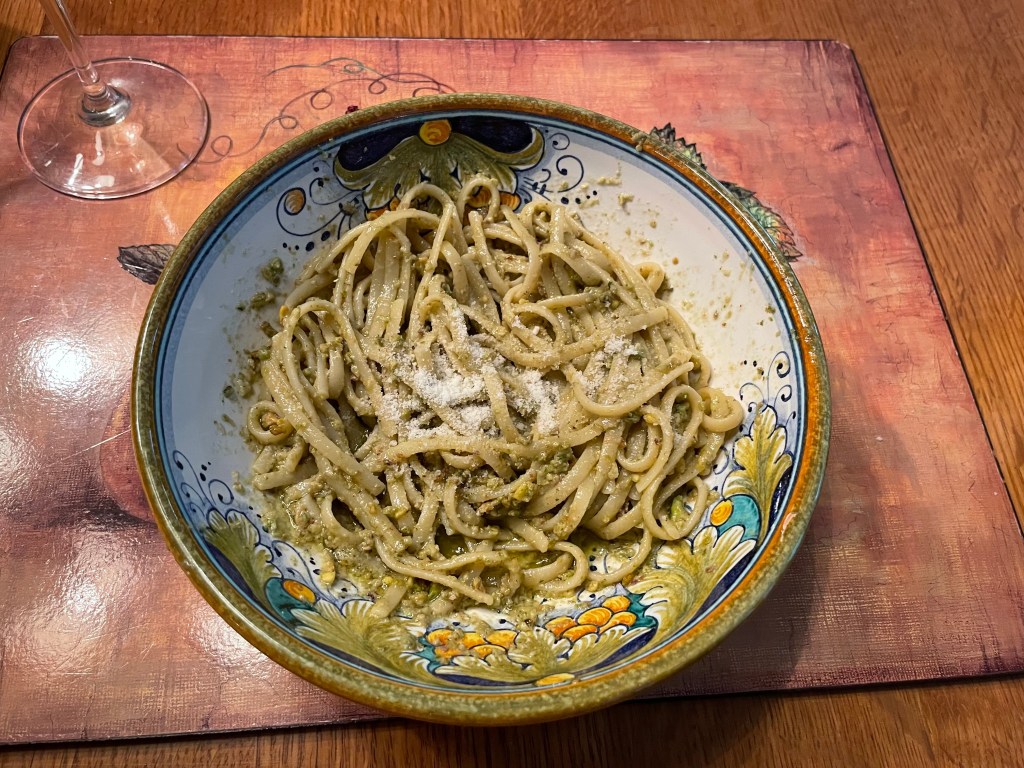
Because of the extravagance of the Table, preparations begin many weeks in advance. The great variety of dishes, baked goods and desserts reflect the fruit, vegetables, and seafood indigenous to Italy. The foods are prepared to be displayed and to be consumed, therefore, attention to detail is important so that the food is as delicious as it is laid-out and offered. Of course, no meat is used, as the feast occurs during Lent when eating of meats was not permitted and meat was scarce during the famine. The main course is a pasta dish containing sardines, tomatoes, and fresh fennel, and sprinkled with breadcrumbs to represent the sawdust of a carpenter and/or to mimic the cheese which was also not readily available then. There are several names for this dish, but it is often called Pasta con Sarde, Pasta con Mudrica, Pasta Moddica or pasta Milanese. Various soups made of lentils and vegetable dishes such as stuffed artichokes, broccoli, and fennel, as well as the all-important fava bean, which is often served roasted and lightly salted, accompany the pasta. The fava bean is venerated because of its sustainability during the famine.
Several days before the feast, the workers begin setting the previously constructed and decorated and draped St. Joseph Table. Typically, there are three levels in honor of the Holy Trinity. The three levels represent the Holy Family of Jesus, Joseph, and Mary. The Table is elegantly decorated with breads baked in shapes to represent Jesus’ Crown of Thorns, the Cross, St. Joseph’s cane, and the Sacred Heart. The blessing of the Altar usually takes place the evening before on the 18th, possibly with a procession and a hymn. And at the altar the Litany of St. Joseph might be said or sung.
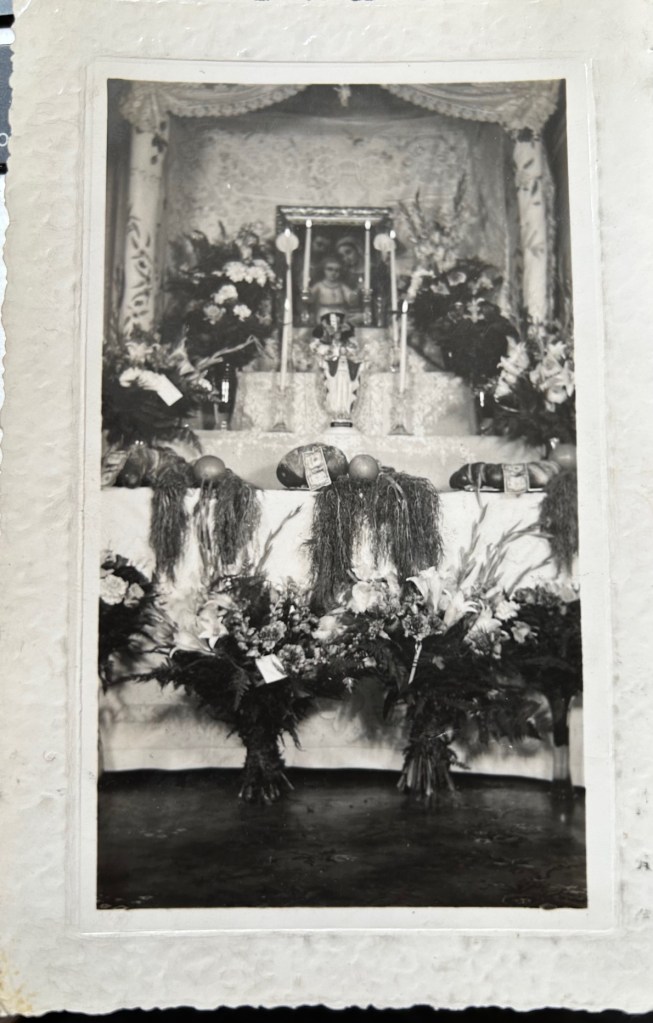
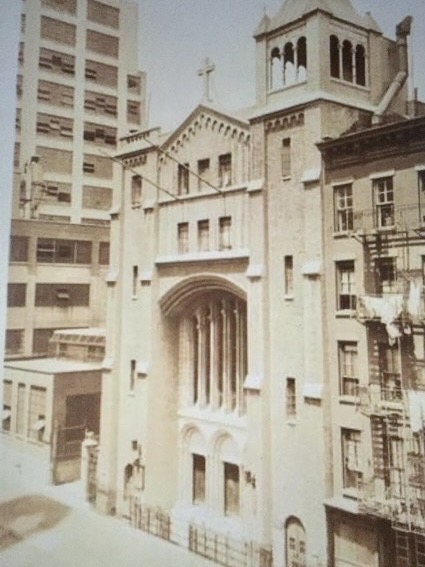
For many years this was a big celebration in our parish Church of the Holy Family and my Little Nonna enjoyed the festivities. But that was long, long ago.
As is the Italian custom, dinner ends with platters of sweets, cannoli (round fried pastry filled with ricotta sweetened with sugar, nuts and chocolate), cuccidati (fig cookies), pignolati (fried pastry kernels mixed with a honey-caramel glaze and shaped like pyramids to represent the pine cones it is thought Jesus must have played with as a child), biscotti traditionally flavored with anise, lemon, almond, or vanilla. Cream puffs and Sfingi di San Giuseppe (which is a round cream puff filled with ricotta cheese or cream and adorned with candied fruits) are very popular offerings.

There are cakes shaped and decorated like lambs, bibles, crosses, or angels. You would see fresh fruit like figs, prickly pears, melons, oranges, and lemons along with candy covered almonds or confetti. The table is accented with fresh flowers, statues, pictures, and other devotional decorations associated with Jesus, Joseph, and Mary. Frittata or omelet pies are also prepared. The various offerings that comprise the meal are each blessed by a priest, thus the food is never wasted or thrown away and always shared since it is blessed and usually given to the poor along with any money that might have been collected.
FAVA BEAN STORY
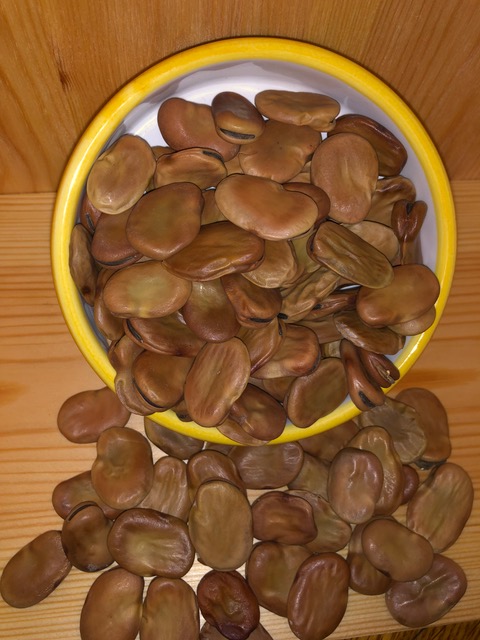
Fava beans play a large role in the Sicilian tradition of the St. Joseph Table or St. Joseph Altar. They may be served in a frittata or in garlic sauce. When dried, roasted and blessed, it becomes the very popular “lucky bean.” Legend has it that you will never be broke as long as you carry one. Some people believe that if you keep one in the pantry, there will always be food in the kitchen. The myth of the fava bean began during the famine in Sicily, where the bean was used as fodder for cattle. To survive, the farmers prepared them for the table. Hence, they considered themselves lucky to have them. The bean is also a symbol of fertility since it grows well even in poor, rocky soil. Italians would carry a bean from a good crop to ensure a good crop the following year. The blessed dried beans are distributed on the altars along with a piece of blessed bread.
La Festa del Papà
Father’s Day is celebrated in Italy on March 19 because it is San Giuseppe (Joseph’s Day). St. Joseph is considered the symbol of the father figure: good, hardworking, understanding and able to raise the Son of God. That is why all fathers are celebrated on Joseph’s Day!
And now you know!
E ora lo sai
There are some parts of southern Italy that refer to the sfingi as a zeppole. They are actually two different desserts.Sfingi and zeppole are both traditional Italian fried donuts. However, there are a few differences between the two. Sfingi are Sicilian donuts that are often made from a dough of flour, sugar, eggs, and ricotta. Zeppole, on the other hand, are a Neapolitan donut that is made from a dough of flour, yeast, and water.

 Ancora
Leave a comment