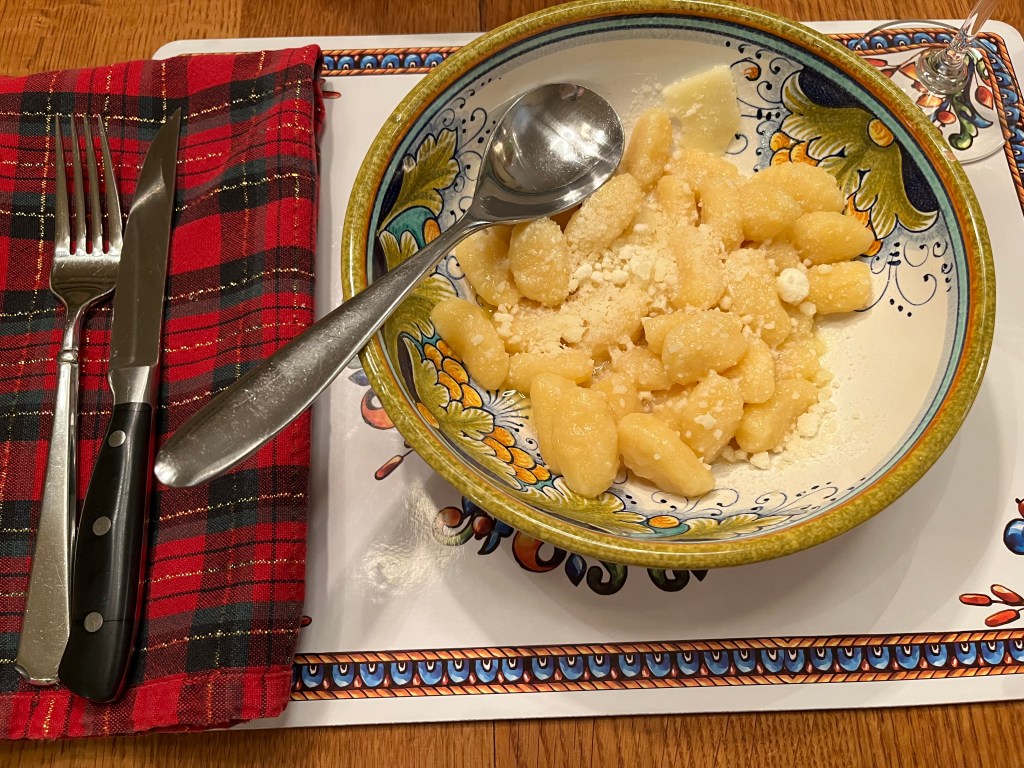
There are endless recipes for making gnocchi and many seem to over complicate the process.
This is the way my Nonna made them. It is not sophisticated nor complicated. Just her simple way to a delicious result. With a little help from grandchildren she could whip up a batch to feed 20 easily!
12-16 oz Potatoes
2 Eggs – Room temp
3 Lemons – zested – saving some juice
1.5 C. Flour – or as needed
3 Tbsp. Extra Virgin Olive Oil
2 Tbsp. Butter
Romano or Parmesan Cheese – for grating, your favorite
NOTE: Russet potatoes work best but in a pinch, you can make any potato work by adjusting the flour amount.
Bake the potatoes for about an hour at 400º or just until they are soft as the time depends on the size of the potatoes. After they cool to the point where you can handle them peel them and put the potatoes thru a potato ricer or grate them into a mound on a clean surface or large pastry board.
Make a well in the center and break two eggs into the well. Add most of the freshly grated lemon zest and beat them into the eggs a bit.
Slowly incorporate the potatoes into the eggs and start adding some of the flour (you may not need all). A pastry scraper helps with doing this part. Work the flour in until a nice dough forms, adding just enough flour so that the dough is not too dry but slightly sticky. Don’t overwork the dough.
When you feel comfortable with the feel of the dough pinch off a small amount and roll into a long fairly thin log (about the width of a frankfurter). Cut the log into 1-inch pieces and gently roll each piece off the tine of a fork to create small indentations. The smaller the pieces the easier they are to handle and they will puff up as they cook.
Set the gnocchi out on a cloth as you make them to rest just a bit. If you are not going to cook in the next half hour, place on a tray covered loosely with wax paper and refrigerate until time to cook.
Bring a large pot of water to a boil, add salt and slowly add the gnocchi a few at a time stirring gently so that they do not stick together. Reduce the heat slightly so that the water is not boiling rapidly as the gnocchi are fragile. As they rise to the top taste one for doneness and as they are to your satisfaction remove from the pot with a large, slotted spoon and gently add to the dish you will serve from. At this point the less you handle the gnocchi the better.
Meanwhile, in a small pan, heat the olive oil and butter along with some of the lemon juice and cook until the butter is slightly browned. Stir in some zest and then pour over the gnocchi and toss gently.
Serve at once and pass the cheese.
NOTE: I prefer to use a potato ricer to make the gnocchi, but you can grate the potatoes on a box cheese grater if you don’t have one. This is a little more tedious because the potatoes tend to crumble unless you grate them slowly.
BUON MANGIATA!
THE STORY OF GNOCCHI
Gnocchi (gnocco, which literally means dumpling and also means “dunce” in the
vernacular) is the singular form and very rarely used as nobody eats just one!) are a classic part of Italian cuisine, particularly in northern and central Italy. They are an exquisite delicacy despite the simplicity of the ingredients and method of making which requires a distinctive feel. But there is nothing better than delicate gnocchi dressed in melted butter and freshly grated cheese.
The gnocchi family is varied and large depending on the region and town. They can be made from the most usual “potatoes” as well as pumpkin, semolina, corn or chestnut flour. In Trentino they are made with a potato dough and red beets and finished off with poppy seeds. In an area near the Austrian border they are stuffed with dried plums. In Trieste they also make a sweet gnocchi called “Gnocchi al Cacao” from potato gnocchi with bittersweet chocolate, candied fruit and served for dessert. In Piedmont they are made from durum wheat semolina and are topped with cheese and then baked in the oven. In Lombardy they are referred to with the unflattering name of “malfatti” which translates “badly made”. Verona hosts a gnocchi festival each year during Carnival time referred to as “Baccanale del Gnocco” or Funzione dei Gnocchi”. On Carnival Friday a “Papa del Gnocho) is chosen and as Pope of the Bacchanalia he leads a festive procession through Verona riding on a donkey and holding a giant fork on which a huge gnocco is skewered. In Venice gnocchi is usually finished with a lobster sauce.
But there is nothing better than Gnocchi dressed in melted butter and freshly grated cheese!
AND NOW YOU KNOW!

 Ancora
Leave a comment