This is a simple Tuscan loaf served deliciously warm from the oven and dripping in olive oil.
2 1/2 tsp. (1 envelope) Active Dry Yeast
1/2 C. Lukewarm Water (110 degrees F)
1/2 tsp. Sugar
2 1/2 C. Flour – plain
1/2 tsp. Salt
5 Tbsp. Extra Virgin Olive Oil – for drizzling
1/2 C. Cold Water
Coarse Salt – for sprinkling
In a small bowl sprinkle the yeast over the lukewarm water and gently stir. Stir in the sugar and let the mixture stand until creamy, about 5 minutes.
In a large bowl, mound the flour and make a well in the center. Pour the yeast mixture into the well. Add the salt and 2 tablespoons of the olive oil to the well. Stir in a circular motion, slowly incorporating the dry ingredients. When roughly half of the flour has been incorporated, add the cold water. Continue working the ingredients until the mixture forms a cohesive ball.
Turn the dough out onto a lightly floured work surface and knead until it becomes smooth and elastic, about 10-15 minutes. Turn to coat with oil, cover with a damp cloth and set in a warm place to rise until the dough has doubled in size and volume, about 1 ½ – 2 hours.
Lightly oil a 10 ½ X 13-inch baking pan. Punch the dough down and return it to a floured surface and knead again for a few minutes. It will be very elastic, springing back when you press down on it with 2 fingers. Roll out the dough on a lightly floured surface, shaping it to the size of the baking pan. Transfer the dough to the pan, set in a warm place and let it rest for about 30 minutes.
PREHEAT OVEN TO 400ºF.
Dimple the surface of the dough with your fingers spacing about 1 ½ inches apart. Pour the remaining 3 tablespoons of oil over the surface and sprinkle with coarse salt.
Bake until golden on top, about 25 to 30 minutes. Remove from the oven and drizzle with additional olive oil if you wish. Remove the bread from the pan and cut into squares to serve. The bread can be stored, well wrapped for up to 2 days. Just reheat slightly or serve at room temperature.
NOTE: many an Italian child will be taking a slice of this to school for his morning “spontino” snack. Grownups might enjoy it in the morning with café while standing at the bar or later in the day for “la merenda” with a glass of wine to get them thru until supper time. For merenda, their afternoon snack, children will most likely ask for a small slice of ciambellone or gelato. We enjoy it at home as an appetizer with a glass of wine.
A LITTLE HISTORY OF EASTER FLATBREAD
The “sticciata,” also known as Easter flatbread, is a traditional dessert with a rich history dating back to the mid-19th century. It emerged as a practical and festive way to use the abundance of eggs available during the Easter season. This dessert was particularly popular among peasant families who relied on the eggs laid by their chickens during this time of year.
The distinctive name “sticciata” comes from the Italian word for “crushed,” referring to the large quantity of eggs that would be beaten or “crushed” into the dough. As a sweet bread, it was enriched with a variety of aromatic ingredients, sugar, and eggs, distinguishing it from everyday breads.
What sets this flatbread apart is its natural fermentation process, which would occur from the heat of large braziers. This form of leavening resulted in a unique texture and flavor that celebrated the agricultural bounty of the season.
Typically made during Lent and enjoyed through to Pentecost or, it was more than just a dessert—it was a staple during a time when other food options were limited. Families would prepare it in large quantities to sustain them throughout the period, making it a beloved culinary tradition that marked the celebration of Easter and the arrival of spring.
BUON MANGIATA!

SWEET POTATO GNOCCHI
2 lb. Potatoes – mixed (sweet and russet)
1 Egg
2 C. All Purpose Flour
Freshly Grated Parmesan or Romano Cheese – for serving
Sea Salt or Kosher Salt – to taste
Put the potatoes in a pot of salted water with enough water to cover them fully and bring to a boil over high heat. When the water has reached the boiling stage, reduce to medium and cook until tender and a knife will pierce easily. (I cook the potatoes separately as they will reach tender at different times. However, you can use the same pot just check individually.)
Allow to cool enough to handle and then peel.
Using a ricer, pass the potatoes through and directly on to a lightly floured board, forming a mound and let cool just a little bit more. Sprinkle 1 ¾ cups of flour all around the potato mound. Make a well in the mound and add the egg and a bit of salt. Whisk the egg with a fork but then using your hands begin to incorporate the potatoes and then slowly incorporate the flour. Have a scraper nearby as this gets sticky. Gather up all the little bits and combine them into the dough. Add the remaining flour, slowly, and very lightly knead the dough until it forms a soft ball. It should not feel sticky at this point. Cover with a bowl or kitchen towel and let rest.
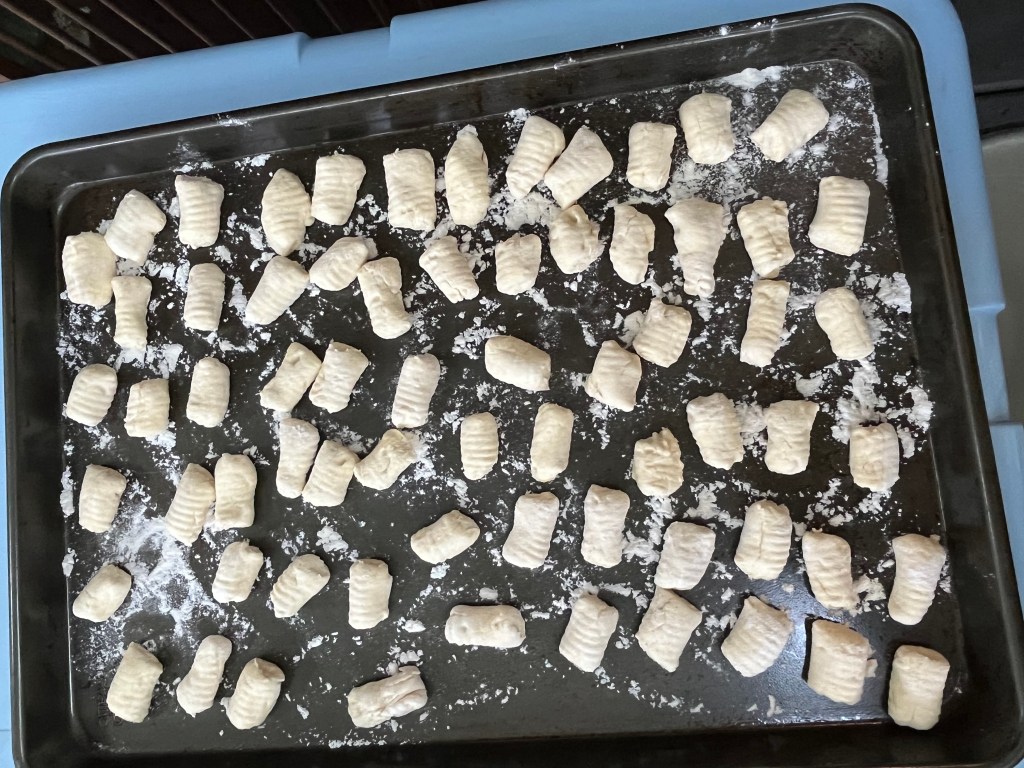
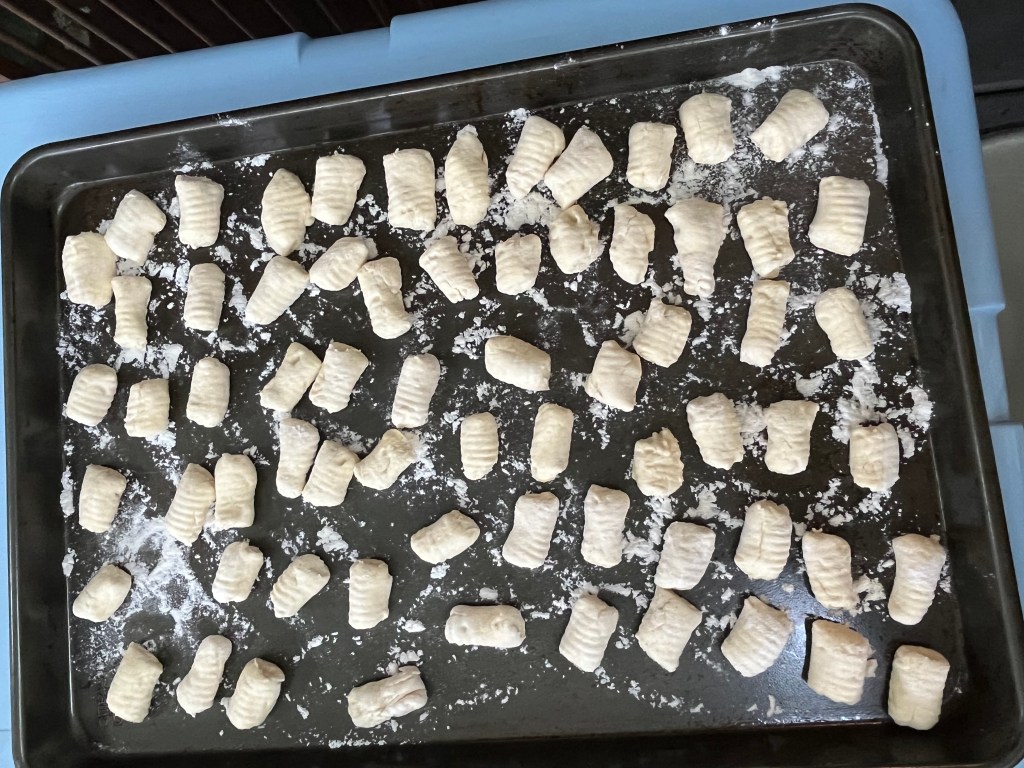
Sprinkle a few rimmed baking sheets lightly with flour or fine corn meal. (When I make enough for a family gathering of 20 or more, I put them on a large cloth light covered with very fine corn meal like my Nonna did.) Flatten the dough a little and shape it into a sort of log. Cut off a 3-inch piece and gently roll into a rope with a thickness a little wider than the size of your thumb or roughly ¾-inch. Cut the rope into i-inch lengths and then roll each along the backside tines of a fork. You do this to create an indentation, and this will help to hold the sauce and also look good. Repeat until all the dough is used, placing them on the cookies sheets until ready to cook. This might make approximately 160-170.
Bring a large pot of salted water to a boil over high heat and cook the gnocchi in batches, stirring softly so that they do not stick together and using a skimmer transfer them to your serving bowl which should contain a little butter and the sauce you will be using over them. Toss gently and serve.
We will probably enjoy with a light lemon sauce which basically is; heat 3-4 tbs olive oil and 2 tablespoons unsalted butter in a small pan until the butter is slightly browned. Add the zest of 3 lemons with a tablespoon or two of the lemon juice and cook, stirring, just until heated all the way through. Pour over the gnocchi and serve at once, passing the cheese.
I have several gnocchi recipes in my new cookbook Basta Pasta, Ancora as well as some great desserts.
BUON MANGIATA


 Ancora
Leave a comment