The 1st of November is a national holiday in Italy, known as Tutti i Santi or Ognissanti, which celebrates All Saints Day and is followed by All Souls Day on the 2nd of November, a day devoted to honor loved ones who have passed away.
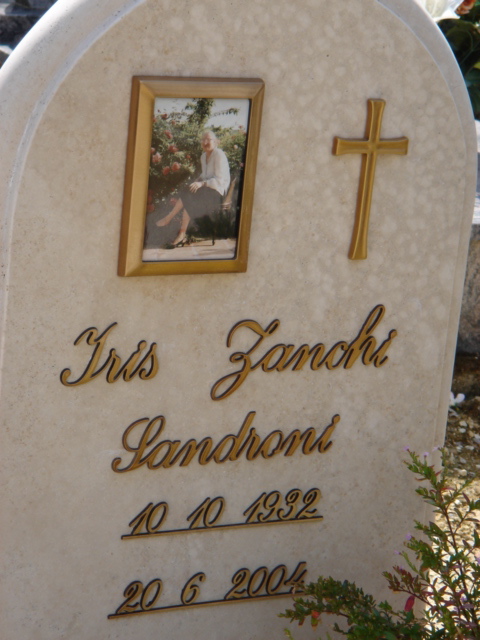
Il Giorno dei Morti begins first at dawn with a somber Mass for the dead, offering prayers and alms for the deceased. After Mass, families visit the graveyard to pay tribute to the faithful who have gone before them. At the cemetery, the graves of family members are decorated with mums and candles. In the dark of the evening another ceremony begins in the cimitero.
I had a wonderful experience several years ago when Charlie and I were in Italy and most fortunately again in Montefollonico the little town where my Father was born and where I still have a much loved family. That night in the dark we, together with young children, elderly, and teenagers, walked on an old country road, some with candles, some with flashlights but all singing. We made our way to the cimitero. There the graves had all been lovingly decorated, during the day, and little candles now softly illuminated the area, and it was peaceful and beautiful in the moonlight. And there, quite appropriately, in the little outdoor cimitero Chapel the local priest said mass. We sang more songs, prayed once more by our loved one’s graves, and then made our way back home, singing in the moonlight. I don’t think I will ever enjoy All Souls Day the same way again, but I hope someday to return and experience it.
Yet, the day is not solely a solemn affair as the remembrance of the deceased will, as always happens in Italy, turn into a celebratory occasion in most regions, especially in Sicily where my husband has family. Both of Charlie’s parents were born I Castrofillippo a little town in Agrigento.
In Sicily, this ‘Day of the Dead’ is known as “Un juornu re muorti“. Children wake up hoping to find a treat from relatives, gone but not yet and probably never to be forgotten. The ‘muorti’ bring presents of toys and sweets. The tradition serves to strengthen family bonds, linking children to family members who have come and gone before them.
Of course, there is a very special cookie baked in every household for this holiday called – Ossi Dei Morti. or Bones of the Dead!
These “Bones of the Dead” are traditionally made to commemorate the Day of the Dead but also appropriate for a Halloween party as well. Many versions of this sweet biscuit are baked throughout Italy and the name varies as well. In some places it’s called “fava dei morti,” or “beans of the dead,” instead of “bones”—not quite as creepy!
This is an adaptation of a recipe from the Basilicata region in southern Italy. Made with Strega, an anise-flavored liqueur that also means “witch,” they’re intended more for grown-ups than kids.
It includes the unusual step of dropping the cookies into boiling water before baking, a bit similar to the way that bagels are boiled after they are formed and before they are baked, to give them their unique texture.
INGREDIENTS
- 8 – 9 cups all-purpose flour (unbleached) – or as needed
- 1/3 cup lard (or vegetable shortening)
- 10 large eggs – lightly beaten, room temperature
- 2/3 cup Strega liqueur – or any anise flavored liqueur such as Sambuca or Galiano
- 2/3 cup granulated sugar
- 1/3 cup olive oil
- Zest of 1 small lemon – finely grated
- Have a pot of boiling water ready
HOW TO MAKE THEM
- Preheat your oven to 400 ºF with a rack in the middle position.
- Using a pastry cutter, cut the lard or shortening into the flour or use a fork, or pulse them together with a food processor a few times until just blended. Transfer mixture to a large mixing bowl.
- Stir in the beaten eggs, one third at a time, stirring with a wooden spoon after each addition until well blended.
- Add the liqueur, sugar, olive oil and lemon zest, and mix until combined.
- Set a large pot of water to boil over high heat.
- Meanwhile, using your fingers, pinch off lumps of the dough and shape each lump into a stick about 3 inches long. Cut a small slit into the middle of each end, then pinch and mold each side with your fingers to form a rough bone shape.
- When the water is boiling, boil the bone cookies, a few at a time, just until they float—remove them from the water immediately as soon as they start to float, using a slotted spoon or fine-mesh skimmer, draining away excess water by gently shaking the spoon or skimmer over the pot.
- Arrange the cookies on a parchment paper-lined baking sheet and bake until well browned about 20 minutes. Remove from oven and let cool completely on a wire cooling rack.
- When cookies are completely cooled, sprinkle them liberally and evenly with powdered sugar. The best way to do this is to use a fine-mesh sieve, held high above the cookies, and firmly tap the side of the sieve with the fingers of the other hand.
- Serve and enjoy!
NOTE: not all of our family enjoys anise type flavorings so I have substituted other liqueurs at times even though not at all traditional. Buona Festa!
BUON MANGIATA!

 Ancora
Leave a comment