A Sweet Treat
PREHEAT OVEN – 400º
5 EGG YOLKS
½ CUP SUGAR
4 TBS POTATO STARCH – sifted
5 EGG WHITES
6-7 TBS JELLY
Grease a jelly-roll pan that measures about 11X17-inches and line it with wax paper and then grease again.
Beat the egg yolks. Add 5 tablespoons of the sugar, beating until thick and light in color. Add the potato starch slowly. Mix well.
Beat the egg whites until stiff but not dry. Fold into the egg-yolk mixture slowly but thoroughly. Pour into the prepared pan.
Bake for 11-12 minutes or until a cake tester comes out clean. Try not to overbake.
Sprinkle the remaining sugar on a large piece of wax paper. Sprinkle more, if necessary.
Turn the cake out onto the sugar. Remove the paper in which it was baked. Press down very, very lightly just make sure sugar adheres. Carefully roll up the cake and cool. Slowly unroll the cake, spread it with jelly and roll it up again tightly but being careful it doesn’t crack.
When cooled and ready to serve sprinkle with more sugar.
Hnah hobn fun eyer moltsayt.
(Enjoy your holiday meal.)
Happy Passover
NEAPOLITAL SFOGLIATELLA
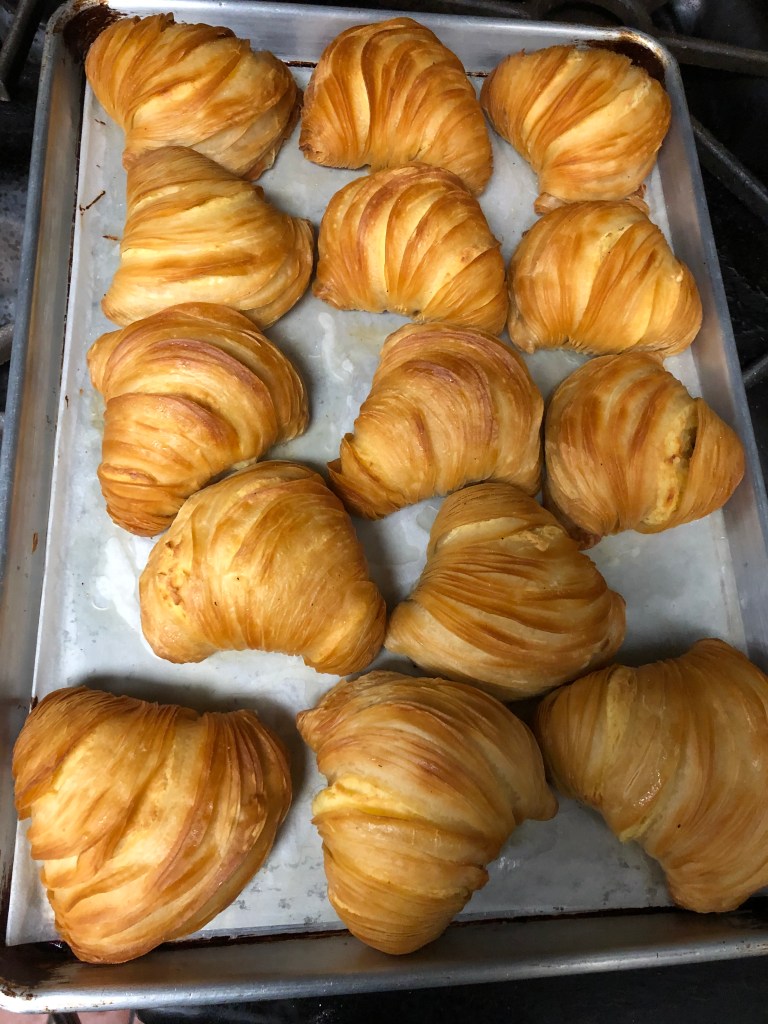
There are several versions of sfogliatella but this is a classic
created by Nuns in a Monastery in Conca dei Marini, along the
Amalfi coast, way back in the 17th century.
While it in itself is time consuming, this recipe still is easier than the
version we are familiar with today which calls for delicately funneling
out the very thin dough to form the cone shape of many
thin flaky layers. It does require patience which I would think the
Nuns at the Monastery had plenty of and, thankfully so.
FOR THE DOUGH:
8 C. Flour – divided
1 ¾ Tbsp. Sugar
7 Tbsp. Lard
1 ¾ C. Water
½ tsp. Salt
Mix in 7 cups of flour with the water, sugar and salt. Mix until well combined and you have a smooth, compact dough. If you feel the dough is too stiff, slowly add more water until you are satisfied, a little at a time. Form the dough into a ball and grease the ball with a little lard, cover with plastic wrap and let rest for a bout 30 minutes.
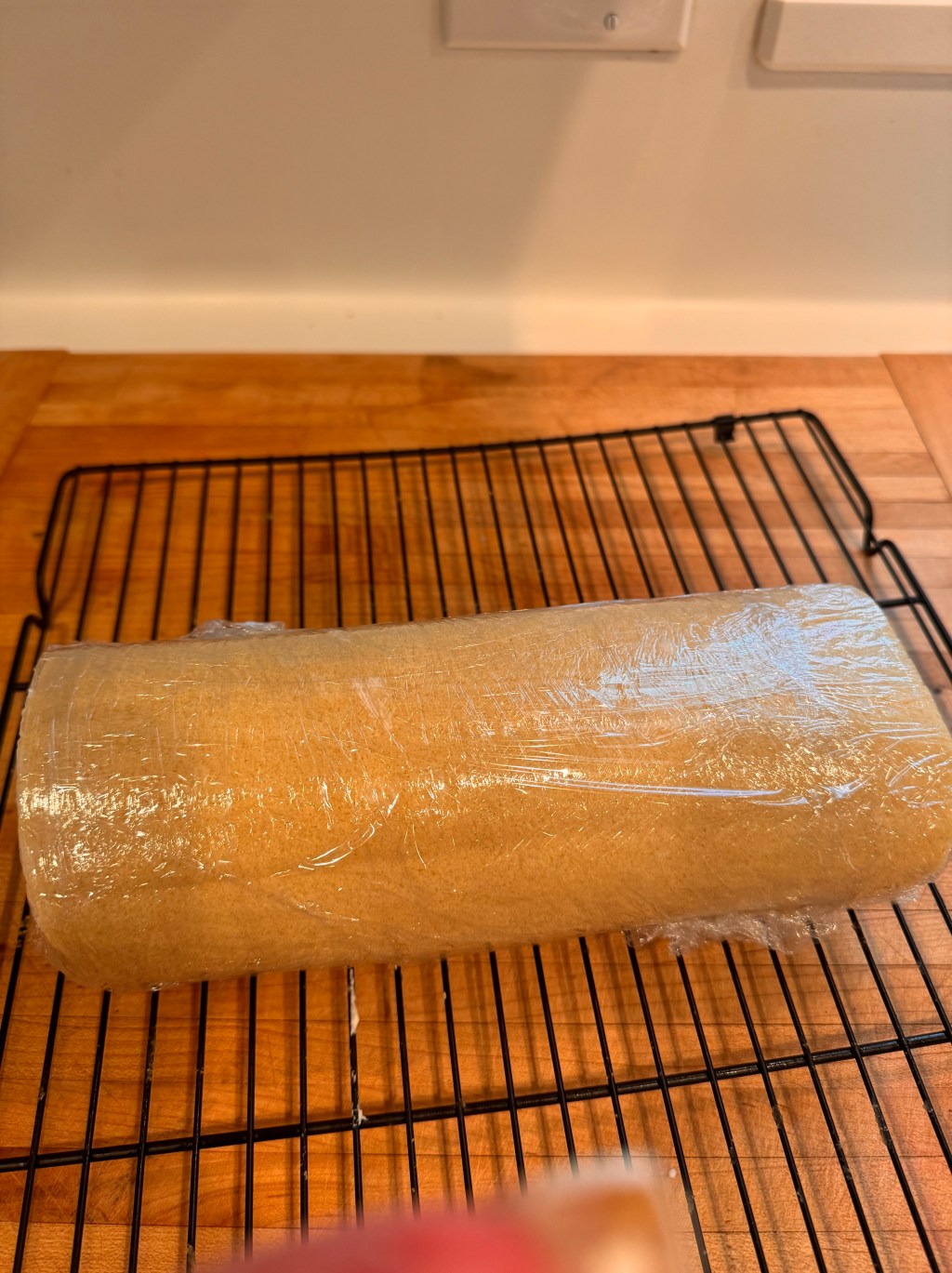
After 30 minutes, flatten the dough slightly and pass through a pasta machine to obtain a very thin sheet of pastry. Dust your work surface with a little flour, lay the dough out and grease the surface with a little more lard. Roll the dough up very tightly so that you have a roll that measures 2 ½-inches wide by 10-inches long. Grease the entire surface with a little more lard and wrap, again, in plastic and place in the refrigerator for at least 4 hours. In the meantime, make the cream filling.
NOTE: This is a very old recipe and sometimes lard is difficult to find. Butter is a good substitute for lard. It does create a slightly different flavor but it is a suitable substittion.
FOR THE CREAM FILLING:
1 ¼ C. Water
¾ C. Semolina Flour
2 Large Eggs
1 tsp. Sea Salt
1 Lemon Zest
1 Orange Zest
¾ C. Semolina Flour
¾ C. Candied Orange Peel – diced
1/8 tsp. Cinnamon
Place the water in a pan and add the salt. Add semolina flour and cook over medium heat for about 5 minutes. Drain well and cool. Once the semolina is cool, place it in the bowl of a food processor. Add the drained ricotta, eggs, diced candied peel, cinnamon, zests from the lemon and orange. Reserve 1 cup of the cream filling to use for decorating the tops of the sfogliatella.
PUTTING IT ALL TOGETHER:
Preheat the oven to 350º. Remove the dough from the refrigerator and using a sharp knife cut it into ¼ to ½-inch thick slices. The thinner, the better!
Grease the surface of each slice with lard and, using your hands, work the dough into a bell shape or fat cone shape. Fill the inside of the shell with the stuffing right up to the edge which will not be closed. Repeat the process until you have used all of the dough and filling. Any extra filling can be combined with the saved filling and fluted on top of the baked pastry. Place the sfogliatella on a baking sheet lined with parchment paper and bake for 20 minutes. Once cooked, allow to cool on a wire rack until slightly warm, then dust with powdered sugar, pipe some of the extra custard filling on top and fit with one stemmed cherry.
NOTE: this should make about 40 small pastries.
The Monastery is no longer. Signora Bianca as she is called by the Amalfians purchased and restored the monastery in 2000 and over a period spanning eleven years, painstakingly restoring it with historical antiques and elements, complete with confessionals and pews. The end results culminated with the perfect blending of the past meeting the present in a hotel and spa. It is now called Albergo Santa Rosa Monastero.
It originally was a Dominican monastery housing Nuns who spent the day farming and cultivating herbs and baking. It came to life through the ambition of Sister Rosa Pandolfi, a descendant of the noble family Pontone di Scala who had taken up residence in Conca dei Marini. The antique church of Santa Maria di Grado, sadly had been reduced to ruins and was gifted to Sr. Rosa. She fortunately had the means to make a difference and so funded the Monastery’s construction which was completed in 1681 and dedicated to St. Rose of Lima. It operated until the late 1800’s when the Nuns were evicted by law and the convent was handed down to the municipality. The Nuns were allowed to live there but it did not receive the attention it needed and fell into disrepair.
In 1924, the property was purchased by a Roman hotelier, Mr. Marcucci, who appreciated the historic property’s beauty and value and transformed it into a hotel.
It was at one time known as one of Italy’s 39 best hotels. However, as things happen, after many glorious years, the last family member died, and the hotel was deserted.
In 200 it was discovered by an American Bianca Sharma, who was so captivated by its beauty that she bought the property, moved to the Amalfi Coast and spent 11 years restoring it to the historical beauty it is today serving as a luxury hotel and spa for visitors from around the world.
A tolling of a bell just inside the gated courtyard announces every guest’s arrival, just as it may have so many centuries ago.
In 1958 I visited the Amalfi Coast with my parents an aunt and siblings. The bakeries in and around the area of the Monastery and especially those in Naples still sold that specific sfogliatella and my Aunt who, in her day, was a very good baker was given the recipe and it was then handed down to me. And now I share it with you.
BUON MANGIATA!

 Ancora
Leave a comment