April 1st does double duty this year. As Catholics step into Holy Week—the most intense stretch of the Christian calendar—Jewish families also begin Passover (Pesach), the festival that remembers the Exodus: the Israelites’ liberation from slavery in Egypt more than 3,000 years ago, as told in the Book of Exodus.
Passover is named for the moment God “passed over” the homes of the Israelites during the final plague—a turning point that becomes both a story of survival and a foundation of Jewish identity: freedom wrested from oppression, and faith carried through uncertainty.
The heart of the celebration is the Passover Seder, held on the first two nights. It’s not just a dinner, but a carefully structured ritual meal—part storytelling, part remembrance—where every element on the table is designed to bring the Exodus to life again, as if it’s happening now.
AS YOU CELEBRATE PASSOVER
We wish you sweet memories.
As each cup is filled with the sweetness
of Passover wine
may your heart be filled with joy
at this special time of year.
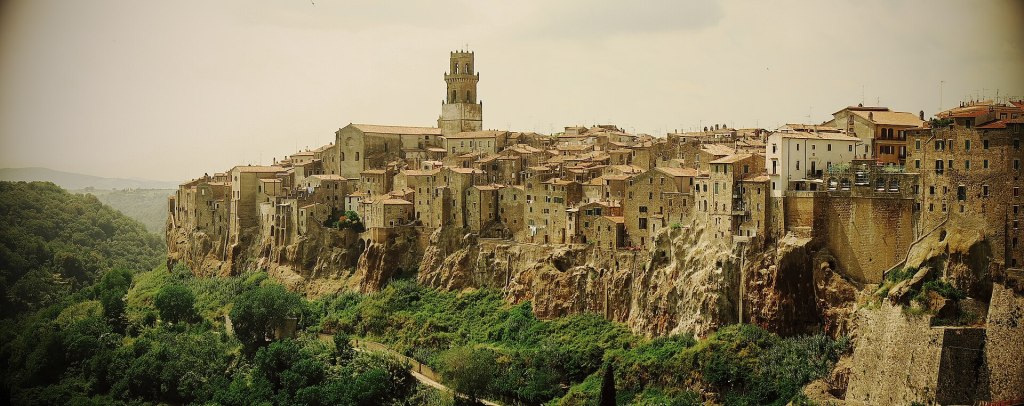
THE AMAZING STORY OF PITIGLIANO!
A Story for Passover.
I’ve read with fascination and reverence the history of Pitigliano and this is how I envisioned this little notable Italian town as I kept reading. I hope someday to actually be there to experience for myself.
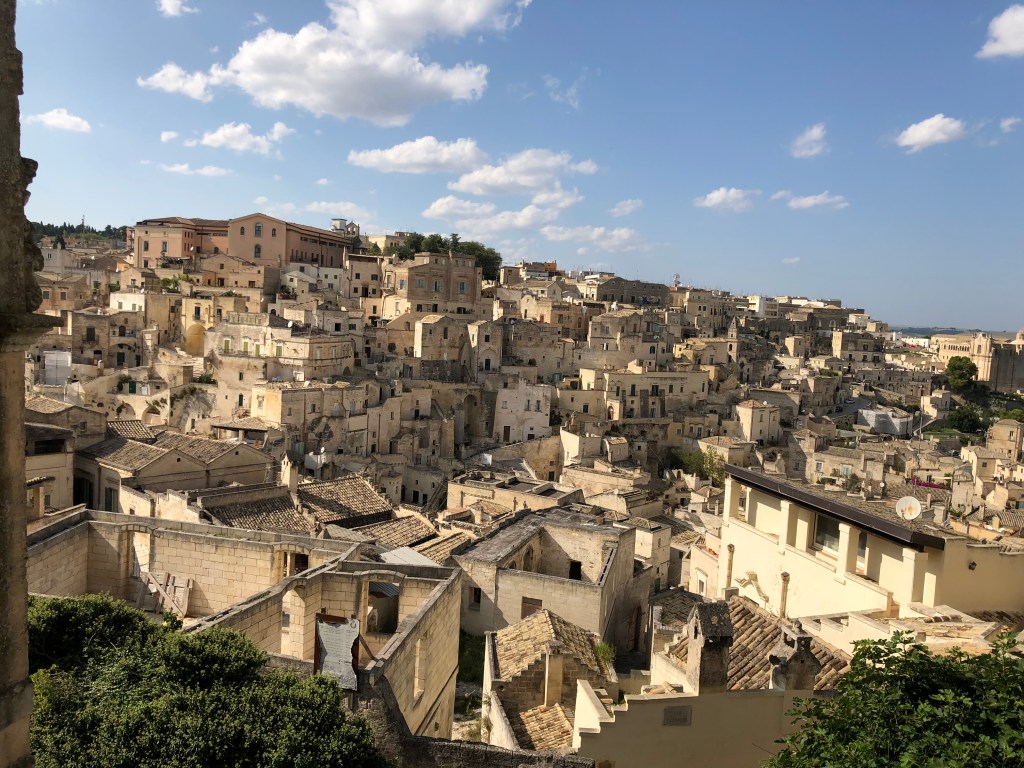
Walking the streets of Pitigliano would be almost as impressive as walking through the Sassi complex in Matera, Basilicata for the first time. An area that I visited and totally was captivated by its presence.
(Sassi has many dwellings that are rock-hewn/cave-derived—the “carved” aspect is central.)
You don’t expect that feeling in a hill town—certainly not before you’ve even found the main square. But it arrives the moment you step onto the old stone passageways and the modern world is left behind.
The lanes are narrow. The houses lean into one another like neighbors sharing secrets. And above everything there is a profound quiet, the kind that makes your footsteps sound louder than they should. For long stretches you might see no one at all—except, perhaps, an old man sitting on his front steps, the newspaper open on his knees, turning a page as though time has nowhere else to be.
You wander without hurrying, letting the mystery of the town lead you. At one corner the street tightens; at the next it opens into a small pocket of light because structures are leavened. You can see doors worn smooth where hands have pushed them for centuries. You pass windows set deep into the tufa stone. And slowly you realize you are walking through a place with two histories layered together, one visible and one nearly hidden.
Pitigliano was once called “Little Jerusalem. “The name clings to the stones like a memory. It began long before the seventeenth century as once thought. It is traced actually back to the late thirteenth, when groups of Jews moved there after leaving Rome, drawn by the possibility of open-air markets and a life with a little more room to breathe. For generations they lived alongside their Christian neighbors, building lives in the sheltered creases of the town.
Then, in 1622, that life was narrowed by decree. They were forced into a ghetto: a cluster of houses pressed to the edge of the cliff, where the land falls away and the wind is feared. There were two small entrances. In the morning the gates would open and the day would begin—trade, work, voices in the street. At night the entrances were closed, and the ghetto became its own contained world, lit by primitive lamps while cloaked in uncertain silence.
At some point in time the Jews were joined by others from Castro, a Tuscan City that was destroyed in 1649 by the papal Army. The population grew to about 6000 inhabitants by the time Italy was unified in 1860. However, a slow decline in the population began either due to mixed marriages or the fact that the Jews could now travel freely. However, in 1943 when the Italian soldiers surrendered to the Allied Forces and the Nazis occupied the territory Pitigliano’s Jews were forced, once again, into hiding. They were protected by many of the locals with whom they had lived in peace and almost ninety percent of Pitigliano’s Jews could be accounted for. But by the end of the war, the Jews like many of their Christian countrymen could not live on in a town exhausted by war and moved away to bigger cities to find a new life.
NOTE: As I researched further on with the help of Amazon, I learned that today the town retains traces of its Jewish heritage. There can be seen the remnants of a bakery and a synagogue which once stood there and sadly a forgotten cemetery. Also it is learned that Pitigliano is home to a series of artificial cuts into the rock to varying depths ranging from less than 3.3 ft to over 33 ft. At the bottom of these cuts are carved channels, apparently for water, although some take the form of steps. The purpose of the cuts is not known. The three main theories are that they were roads, quarries, or water conveyance schemes; they radiate outward from the base of the butte of Pitigliano, down to the rivers then back to the top of the plateau that surrounds the town. Numerous vases and artifacts have been recovered from the necropolis and are on display.
Chag Pesach Sameach
Anita, Charlie and Family
E. 48th Street Market Staff

 Ancora
Leave a comment